
Payment Pathways That Shape Mobile Slot Play and Live Dealer Payout Timing
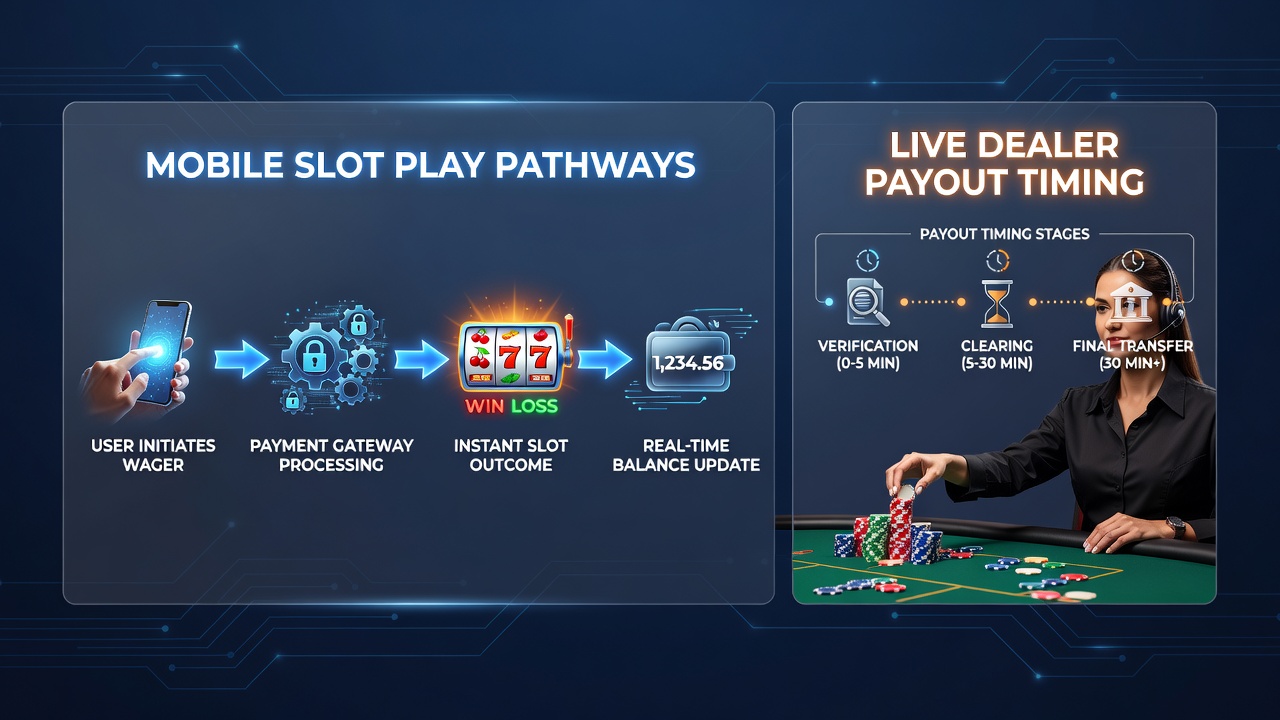
Payment pathways determine how quickly funds move into and out of mobile slot sessions while they also set the pace for live dealer payout confirmations across different platforms. Digital wallets, bank transfers, and card networks each follow distinct processing routes that affect session continuity in slots and verification steps in live dealer environments, with operators routing transactions through specific acquirers and processors that operate under regional rules.
Deposit Routes and Mobile Slot Session Flow
Mobile slot play relies on near-instant deposits to keep reels spinning without interruption, and certain pathways complete authorization in seconds while others introduce brief holds. E-wallet services transmit confirmation codes directly to the gaming server, allowing players to load balances and enter bonus rounds immediately, whereas traditional card payments may route through additional fraud checks that extend the interval before credits appear. Data from transaction logs shows that integrated mobile banking apps reduce average deposit times to under ten seconds in many jurisdictions, which keeps slot engagement metrics stable during peak hours.
Regional payment rails add another layer because some markets require currency conversion steps that lengthen the sequence from player initiation to balance update. Observers note that platforms using local instant payment systems in Europe and parts of Asia record higher session completion rates than those limited to international card networks, since the former bypass intermediary banks and their settlement queues.
Verification Layers in Live Dealer Environments
Live dealer games introduce extra timing variables because dealers and studio systems must confirm both the incoming wager and the outgoing payout in real time. When a player requests a withdrawal after a blackjack hand or roulette spin, the pathway chosen earlier determines whether funds clear within minutes or require manual review that stretches into hours. Systems that link e-wallet accounts to verified identities often release winnings faster, while bank wire routes trigger additional compliance checks tied to anti-money laundering thresholds.
November 2026 brings updated reporting requirements in several North American and Australian markets that affect these timelines, as regulators now require operators to log payout pathways and report average completion intervals for live dealer tables separately from slot activity. These rules aim to align processing standards across mobile channels without altering the underlying technology stacks.
Cross-Border Rails and Settlement Timing
Cross-border transactions introduce currency conversion and intermediary hops that stretch payout windows for live dealer participants who play from locations outside the operator's primary licensing region. Platforms that maintain multiple settlement partners can route requests through the most efficient corridor, and figures from industry processors indicate that optimized routing cuts average live dealer withdrawal times by up to forty percent compared with single-rail configurations. Slot play remains less sensitive to these delays because most activity occurs within a single session funded by an initial deposit.
Stablecoin pathways appear in select jurisdictions where local rules permit their use, and these routes settle on blockchain networks that operate continuously rather than during banking hours. Research from payment technology firms shows that such options reduce weekend and holiday backlogs for live dealer payouts while maintaining the same compliance checkpoints applied to traditional methods.
Regulatory Reporting and Operational Adjustments
Operators adjust internal workflows based on data collected from each payment pathway, and monthly reports submitted to bodies such as the Pennsylvania Gaming Control Board now include segmented statistics on mobile slot deposit success rates alongside live dealer payout durations. Similar filings reach Canadian provincial authorities and Australian state regulators, creating a shared dataset that highlights which combinations of rails and verification layers produce the shortest end-to-end times.
Those who manage live dealer studios schedule dealer shifts and table openings around peak payout request periods, since sudden clusters of withdrawals can affect table availability when manual approvals are still required. Mobile slot floors experience fewer ripple effects because automated systems handle most balance updates without human intervention.
Conclusion
Payment pathway selection shapes both the rhythm of mobile slot sessions and the reliability of live dealer payout timing through differences in authorization speed, verification depth, and settlement schedules. Platforms that maintain diverse rail options and comply with evolving regional standards deliver consistent performance across both game types, and ongoing regulatory updates scheduled for late 2026 continue to refine how these timings are measured and reported.